Loading...
Do's and Don'ts of Meditation
Essential guidelines for a genuine practice
About This Practice
Every Acharya Lively Meditation unfolds in stages. Some techniques have two, some three, some four — but never without purpose. Each stage is a doorway, carefully designed to take you deeper into consciousness.
The first stage begins the journey — it shakes you out of your mechanical patterns and brings a shift in your energy. The second stage deepens this movement, taking you further inward. Each stage has its own intelligence, its own rhythm, its own work to do within you.
Do not be in a hurry. Do not try to jump from the first stage to the third. Life does not jump — it flows. Meditation too is a flow. Trust the sequence, trust the process. And if at any moment you forget what to do — don’t be disturbed. Just watch. That is the essence. That is the core.
Your movements may not always match the instructions. Your hands may move differently, your body may dance in unknown ways, your posture may change on its own — or sometimes nothing may happen at all. Let it be. Meditation is not repetition — it is discovery. Something new has to happen, something unknown must be allowed. Do not control it, do not judge it, do not correct it. Simply flow with it. Remain a witness to whatever is happening within you and around you.
Remember: It is not the perfection of the stage that matters, it is the presence of awareness.
How to Come Out of Meditation
The real purpose of meditation is not to “come out” of it — but to carry it with you into your life. Meditation is not an activity confined to a session; it is a fragrance that should follow you wherever you go. Still, as the session completes, allow yourself to return gently. Do not rush.
Remain relaxed. Take a few deep, conscious breaths. Let the body feel its own weight again. Slowly, very slowly, open your eyes — as if you are opening them for the first time. Move your hands softly. Stretch your arms open… as if you are welcoming existence itself.
Do not get up suddenly. There may be numbness in your legs — this is natural. There may be slight pain — feel it, don’t resist it. You may feel sleepy, or deeply relaxed, or even a little disoriented. Be with it. Meditation is not about escaping life — it is about feeling life totally.
After the final stage, sit quietly for a few more minutes. Let your body settle, let your system integrate the experience. If you wish, you may drink water or eat something — but remain in that relaxed space. Do not immediately rush into activity. Do not pick up your phone. Do not hurry out of the meditation hall. Just sit… and feel yourself. Let the silence sink deeper. Because meditation is not something you finish — it is something that begins.
Eating and Drinking Before Meditation
Meditation is not against life — it is a deeper way of living it. It is perfectly natural to eat or drink water, juices, or light nourishment before you begin. A hungry body becomes a distraction; it pulls your awareness outward. Meditation is not about fighting your body — it is about being at ease within it.
Let the body be comfortable. Let it be supported. Avoid alcohol before meditation. It dulls awareness rather than deepens it. Smoking may not disturb the process in the same way, but awareness — not habit — should be your guide. Slowly, as meditation deepens, many habits fall on their own. Meditation is not discipline imposed from outside — it is intelligence arising from within.
Health and Meditation
If your body has limitations, honor them. There is no achievement in pushing beyond your capacity. Vigorous breathing, intense movement, or dynamic stages should only be done to the extent your body allows. Do not force the breath. Do not overexert in dance. Do not jump beyond your comfort.
This is not a competition. No one is judging you. No one is giving you marks. Do not imitate others. Each body has its own rhythm, its own history, its own intelligence. Respect it. The very essence of meditation is freedom — not force.
Meditation and Medical Care
Meditation is a support to life, not a substitute for medical care. If there is pain, illness, or discomfort — be aware of it, feel it — but do not ignore necessary medical attention. Awareness does not mean neglect. Wisdom lies in balance. Take care of your body. It is the temple through which meditation flowers.
The Role of Techniques
Music, breathing, movement, posture, stillness — these are all devices. They are carefully designed to bring you into a state of meditativeness. But remember: Without watchfulness, they are empty. They can become just dance, just exercise, just sound — if you are not present.
The real meditation begins when you start watching — your body, your breath, your thoughts, your inner movements. Witnessing is the key. Everything else is only preparation. The moment you are aware… meditation has already begun.
Positions in Meditation
Different meditation techniques use different postures. Some ask you to stand, some to sit, some to lie down. These are all methods — devices — to help you enter meditation. But there is no ideal posture in meditation.
Meditation is Samadhi — a state of witnessing. And witnessing is not dependent on how you sit, stand, or lie down. It is simply the art of watching — your thoughts, your body, your actions. And this watching is not meant only for a meditation session. It has to flow into your entire life… throughout the day.
Comfort Over Perfection
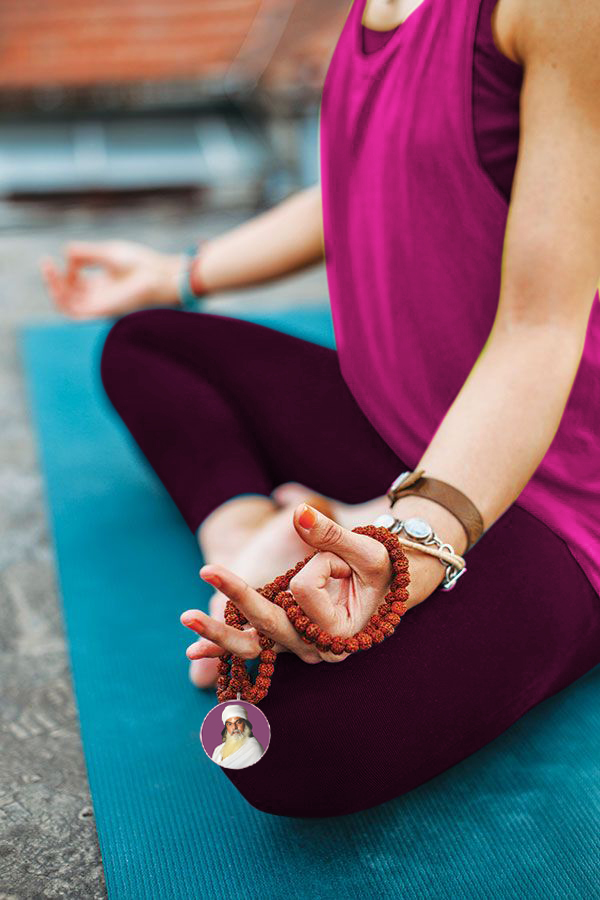
Sitting is often used because it helps the body become still, and stillness supports awareness. But even here — comfort is more important than correctness. Sit in any position where your body can relax. There is no need to struggle with difficult postures. Meditation is not a test of flexibility — it is a return to ease.
Those who cannot bend their knees can sit on any comfortable chair. Place your palms over each other, cross your knees over each other, and watch yourself. You can use pillows, backrests, cushions, or a floor mat to enhance your comfort while being seated. In cold countries, you can wear warm clothes, gloves, a cap, or a sweater.
Let the body be at rest so awareness can awaken.
From Practice to Living Meditation
In the beginning, postures and positions help you enter meditation. But as awareness deepens, something beautiful happens. Meditation is no longer confined to a posture. You begin to witness while walking, while talking, while driving, while watching a film, even in the most intimate or intense moments of life. This is the real goal. Not a perfect sitting position — but a continuous state of awareness.
The Essence
Postures are just the doorway. Meditation is the space beyond. Do not get lost in how you sit. Remember why you sit. To watch. To be aware. To be present. Once witnessing arises… every position becomes meditation.